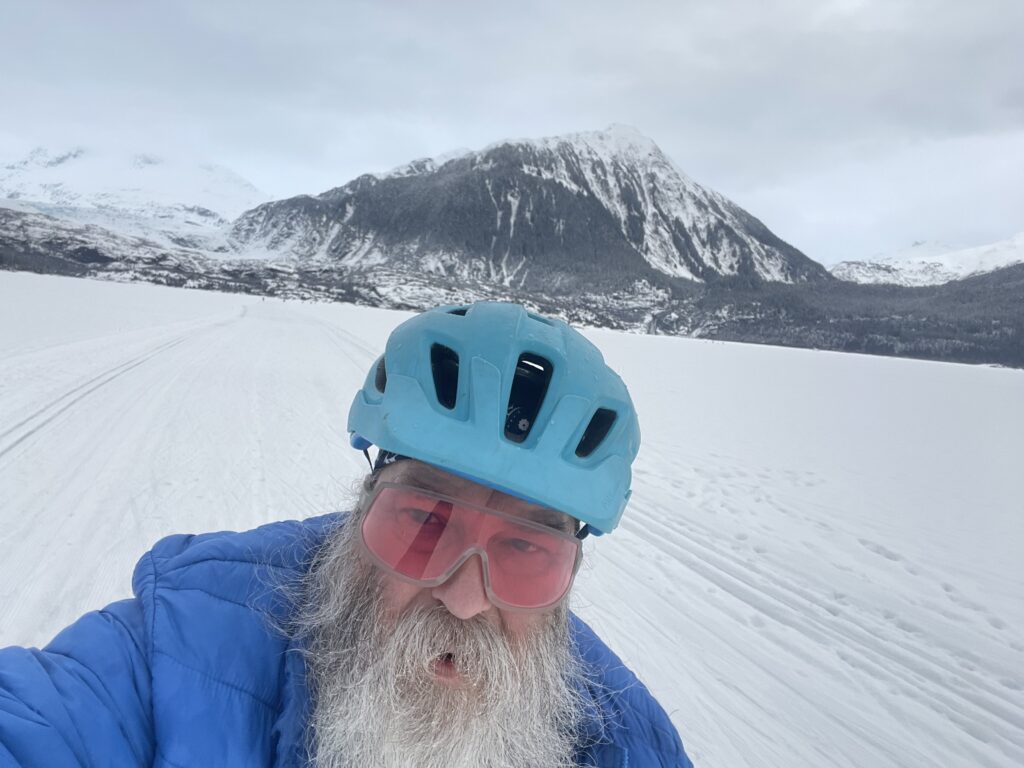
A guide on how to do it. A guest post by Gary Little.
Winter is rapidly approaching and you have decided to ride your bike. First off. What is wrong with you? Get used to that question, you will hear it a lot. Just smile when you hear this because you know the feeling of cutting “First Tracks” on the way to work in the morning. You also know the feeling of riding in the absolute silence of a winter’s night, and they don’t.
The things that I have learned from riding in the winter could fill a book, but most of them are dependent on the conditions so I will just hit the big points and you will have enough information to get you going comfortably and safely.
Tires:
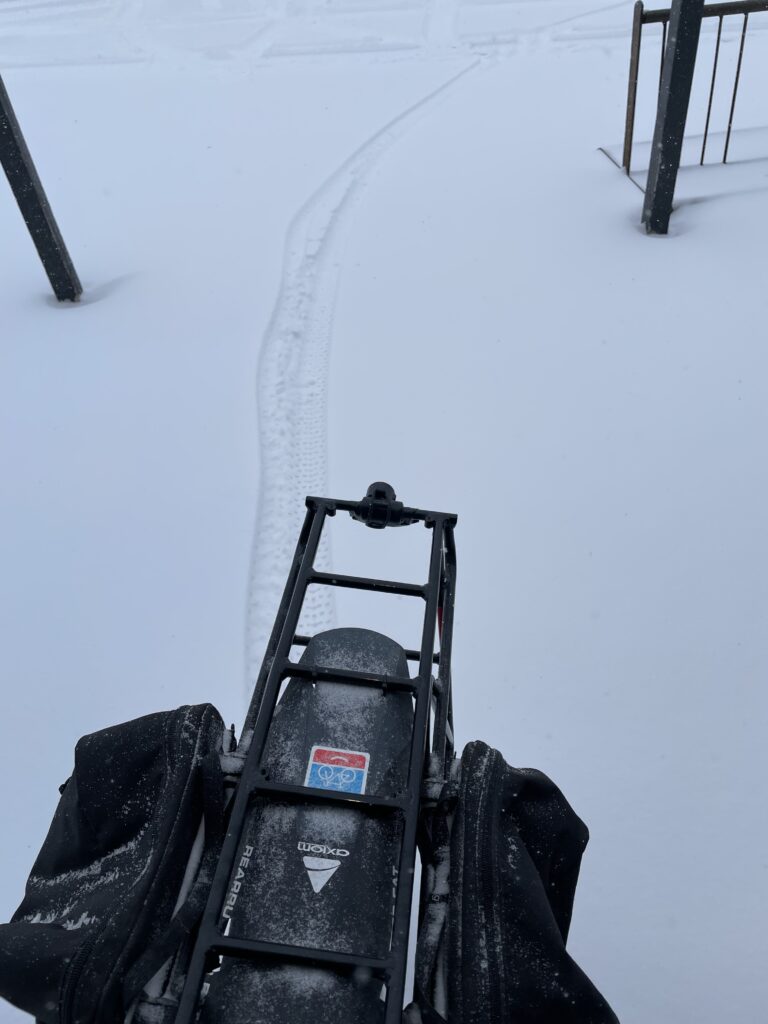
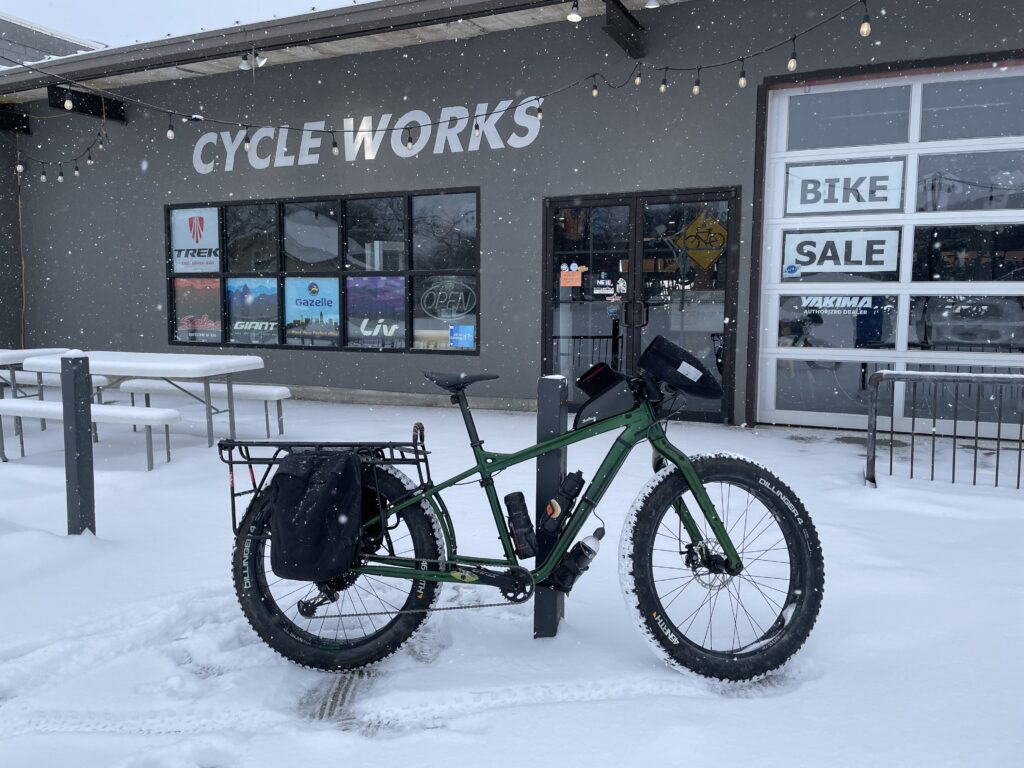
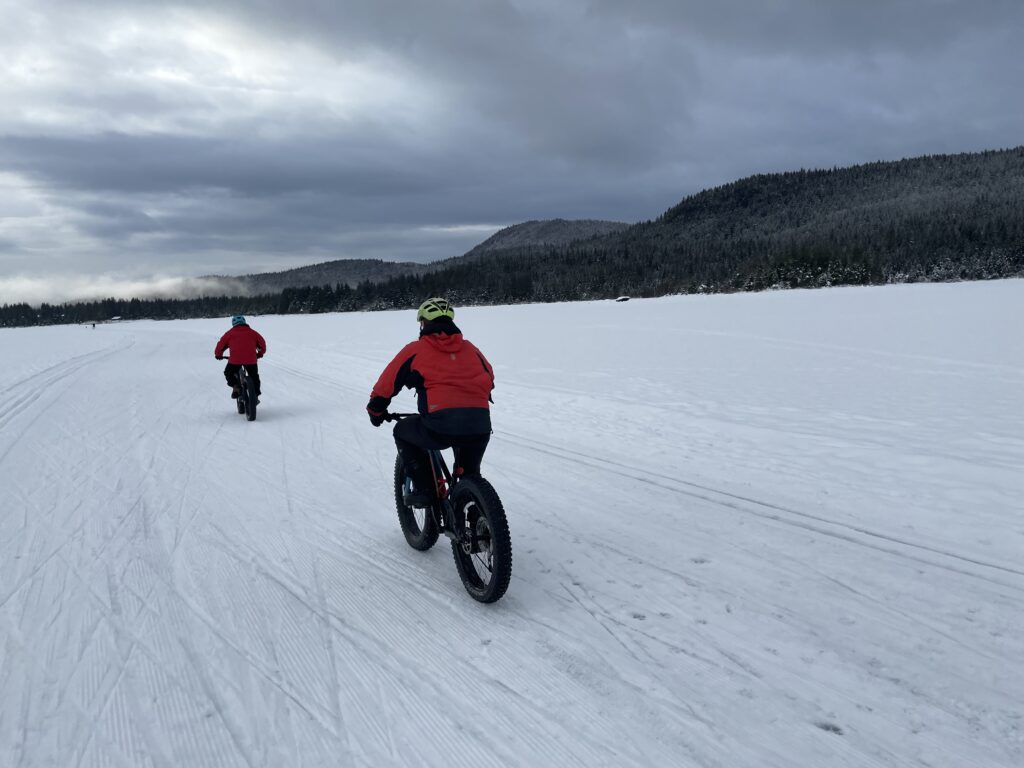
The tires you run are the most important part of winter riding. If it’s snowing, I usually ride my fat bike. 4 inch wide tires with low (4-5psi) air pressure will get you through just about anything.
If there is ice, you will definitely want some studded tires. The studs will grip the ice, where a normal tire will just slide and dump you in the street (trust me). Studded tires are heavier than your normal tires, and they feel kind of like riding on rocks so you won’t be setting any land speed records on them, but if the ice is thick enough you can go explore that pond that you pass by every day.
You probably will want to have a wheelset with the studded tires already mounted so that you can simply swap wheels on the days that it is icy out. Alternatively, you could just keep a winter bike already set up and ready to go.
If you are on a fat bike, you can go with studded fat tires. Fair warning: If you have a studded fat bike, the smile on your face may have to be surgically removed.
You don’t need studded tires every day, and they are not cheap, but they will last just about forever if you take care of them ( I have been using the same set that I picked up used 12 years ago and they are still doing just fine).
Maintenance:
Winter riding is hard on your bike. There is no way around it, but you can do these simple things after your ride to keep your bike working like it is supposed to.
Keep your chain clean and lubed. Your chain is what drives you forward. When it is crusty and rusty it can’t do an efficient job. After your ride, wipe the chain down with an old rag to clean off any snow/ice accumulation and dry it off. Apply lube just like you normally would. The only real difference between this and summer riding is that you will be doing it more often. All of the grit and grime that is on the road will stick to your drivetrain and cause things to not work.
Wipe the bike down after your ride. Rode hard and put up wet is bad for horses, and it’s no better for your bike. Just a quick wipedown after your ride will keep things dry and you won’t have gray dirt stripes on your pants every time you walk past your bike.
Gear:
Zero degrees isn’t that cold. Seriously. Winter riding gear has come a long way in the past decade. Wear layers. I can not emphasize this enough. A heavy coat isn’t going to do the job on the bike. I usually wear either a merino wool, or moisture wicking shirt with a windproof cycling jacket (bright orange) and a pair of lightly insulated gloves (this gets me down to about 10 degrees, but your mileage may vary). On my lower half I still wear shorts down to around 30, below that I will wear a pair of insulated running tights. Since my feet are always the first part of me to get cold I wear winter riding boots that are super warm and as a bonus they are clipless, so that I have a little better control of the bike.
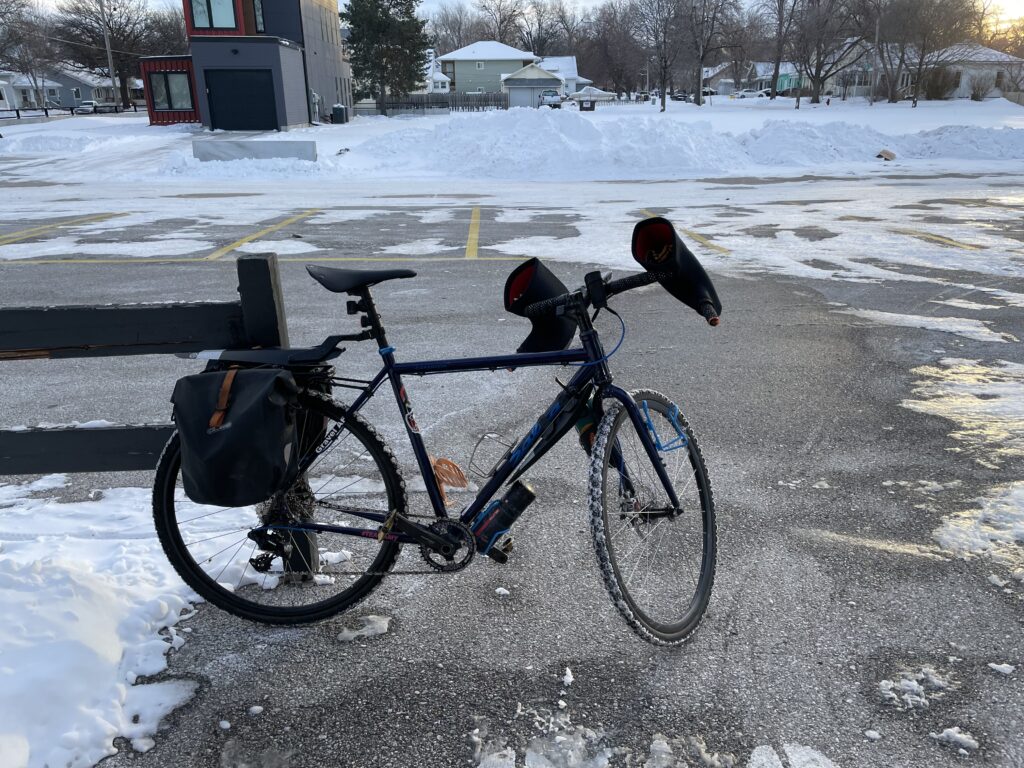
Pogies, or bar mitts are almost a necessity in the winter to keep your hands warm. With them you may be able to wear your summer gloves deeper into the season, keeping your hands more comfortable.
You will fall down:
Learn to laugh at yourself. Everyone around when you pull up to a stop light is going to laugh when you put your foot down on that patch of ice that you didn’t see. It happens, but you are out having fun.
Don’t try to “Fight the Fall”. Trying to stay upright hurts more than just letting the fall come to you. Sometimes all you can do is to try to make a graceful landing. As long as you’re not seriously broken, get back up, shake it off, have a laugh about it and get back to turning the pedals. It is much easier to laugh at yourself after a crash when you are out riding with friends because unless this is your first winter ride we have all been there before.
Now you have the basics of riding in the winter. Come out and play in the snow with us.