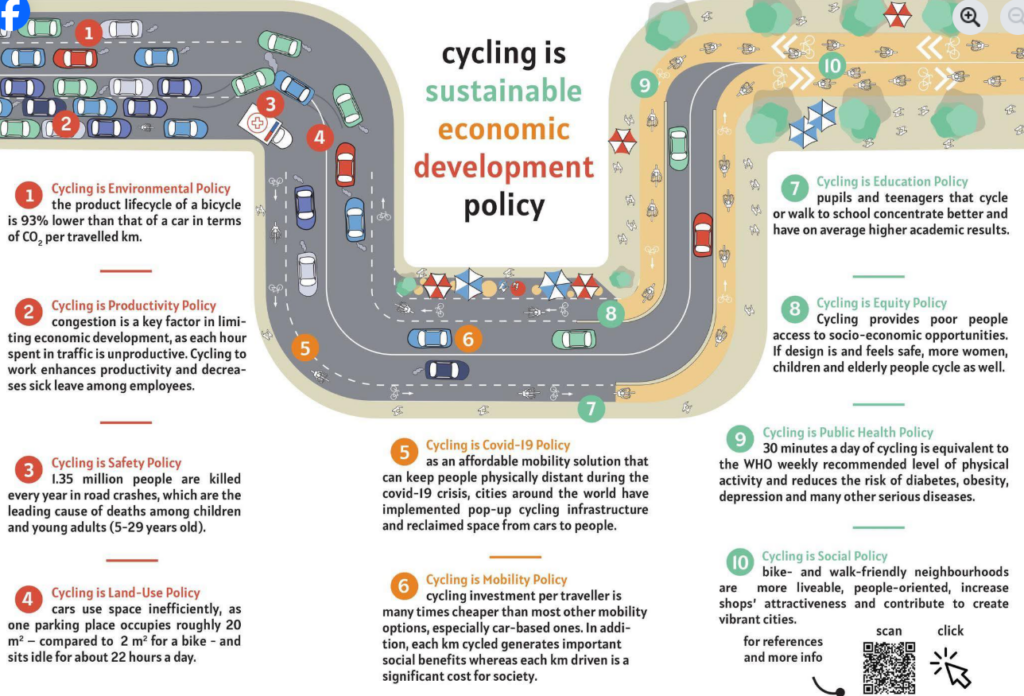
This week’s blog features observations from Evan, a former resident of Lincoln who now lives in the Netherlands. I asked him to compare his riding habits from when he lived in Lincoln to his riding habits now, and why he thinks they’re different:
In America I would mostly bike for novelty, if that’s the right word. Meaning going for rides with friends and occasionally to do errands when the weather was nice. But now it’s my primary source of transportation, I bike to work (about a 15 minute ride through the city) no matter the weather, and sometimes it’s quite bad. I bike to meet with friends, get groceries and we’ve carried Ikea furniture on our bikes.
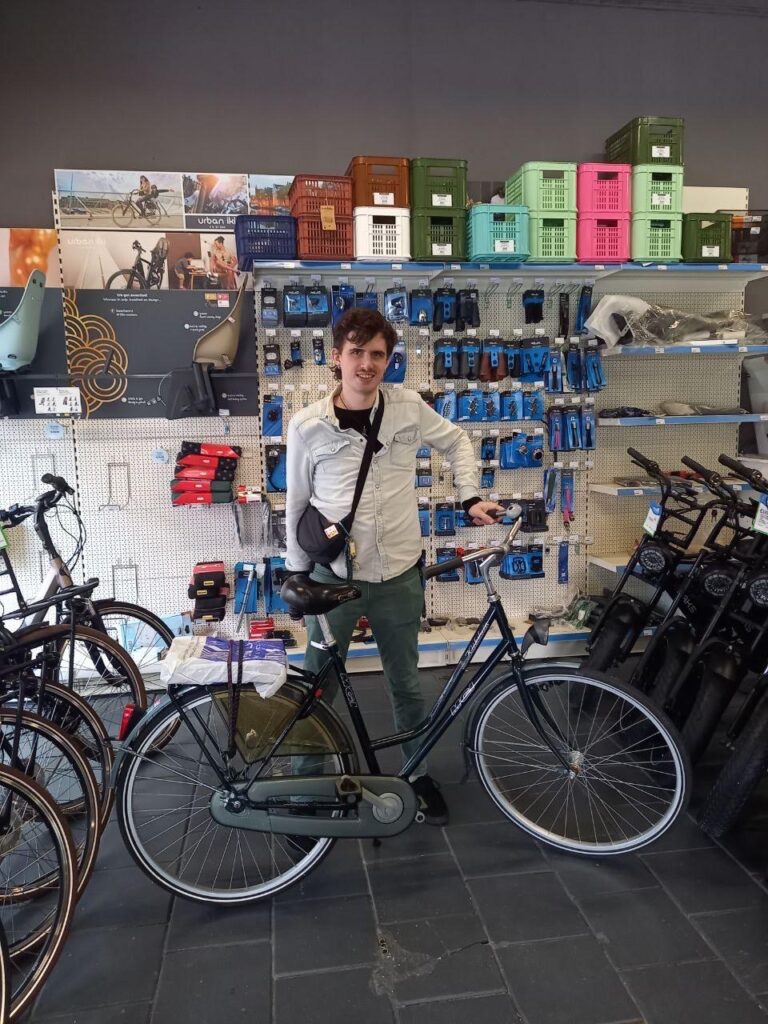
I think there are a lot of reasons it feels easier to make a habit of. I think it’s mostly thanks to the infrastructure, everything is flat, bikes tend to get direct and protected paths, it’s dense so you never have to go too far, and built to a scale that generally favors cycling and walking, simply it is a pleasant experience.
People also view cycling as a function of city life, though there are of course passionate hobbyists, most people who cycle regularly wouldn’t consider themselves cyclists. If you aren’t biking you’re just missing out on a great way to get around!
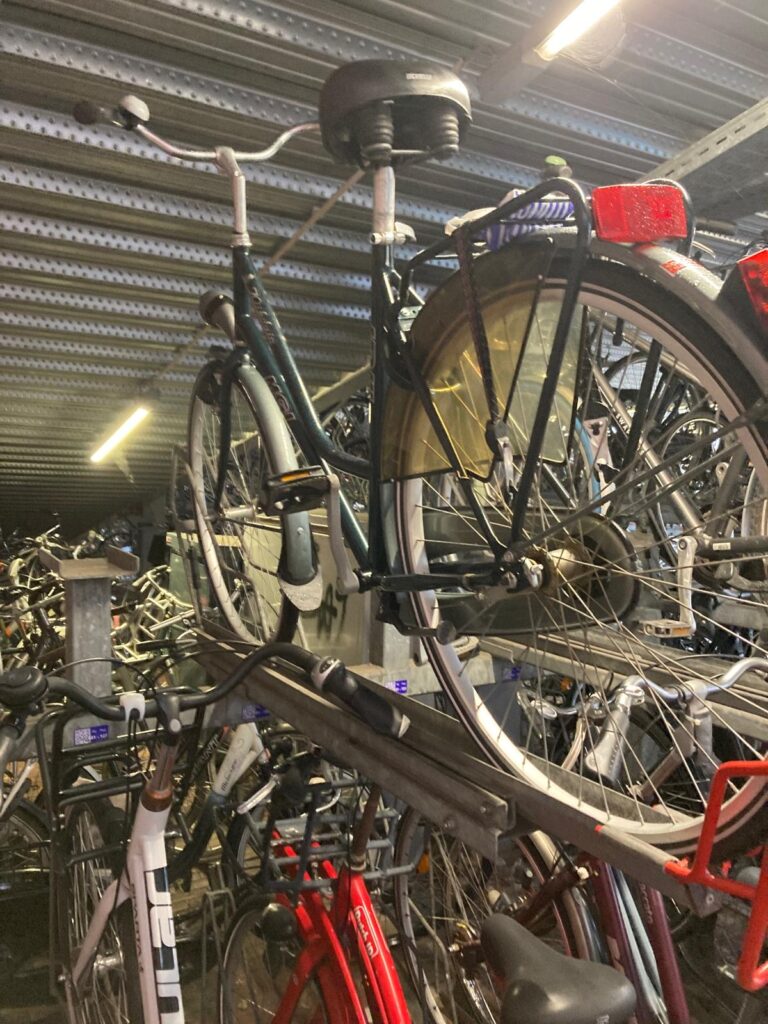
To dig a little deeper why Even’s experience is so typical in the Netherlands I went to the Dutch Cycling Embassy. This is from a recent post:
“We all find happiness in cycling in different and special ways. The Dutch call it fietsgeluk.
2025 marks 50 years of Fietsersbond, the Dutch Cyclists’ Union – half a century of representing the rights, safety, and comfort of cyclists across the Netherlands. In honor of this milestone, three short videos have been made about cycling happiness.”
There are three videos in the link. The first, and longest, does not have subtitles. The second and third that follow it do, so you might want to skip over the first one. Watch the full-length video here: https://youtu.be/EmRSA1mUWGo?si=KgZbS4tcQGT5nYVR,
The Dutch Cycling Union started as a response to the high number of cyclist and pedestrian deaths being caused by drivers of motor vehicles. They came to understand that the answer lay in creating a better cycling infrastructure. As a result, their cities have become much more pleasant places to live.